
Defining the points meta landscape
The "points meta" represents a structural shift in how crypto projects distribute value. Unlike traditional token airdrops that often rely on snapshotting wallet balances at a single moment, the points meta rewards continuous engagement. Projects now track specific user actions—such as liquidity provision, transaction volume, or daily logins—to accumulate points. These points serve as a proxy for future token eligibility, turning user activity into a quantifiable metric.
This model prioritizes loyalty and sustained interaction over passive holding. By decoupling immediate token distribution from user activity, projects can align incentives with long-term ecosystem health. The value of these points is not inherent; it is speculative until a Token Generation Event (TGE) converts them into tradable assets. Until that conversion occurs, points are often non-transferable and hold no liquid market value.
Understanding this landscape requires distinguishing between simple loyalty programs and complex airdrop farming. The points meta is not just about earning free tokens; it is about participating in the operational mechanics of a protocol. For investors, this means the primary research focus shifts from tokenomics to engagement metrics. You are no longer just buying a token; you are investing in the activity that generates it.
Tracking market performance trends
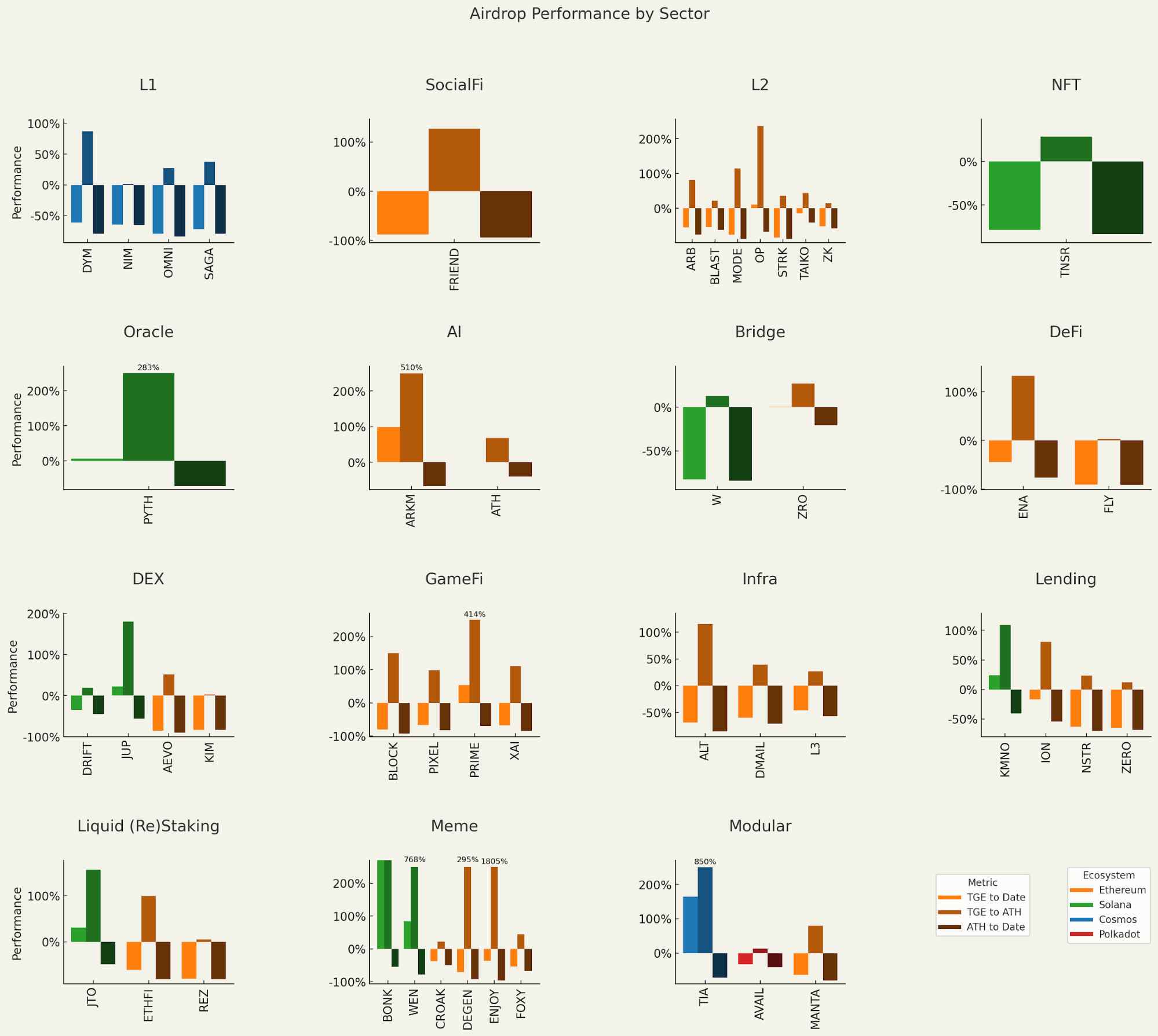
Understanding how points-based protocols behave after a token launch requires looking at the data, not just the hype. The "points meta" has fundamentally shifted how value is distributed in crypto, but it has also introduced new volatility patterns that traditional models didn't face. By tracking these trends, you can better anticipate the price action of tokens like $MASK and others in the ecosystem.
The transition from points to tokens often results in a period of significant price discovery. Unlike traditional airdrops that distribute tokens uniformly, points-based systems accumulate value over time, meaning the initial sell pressure can be unpredictable. This is where live data becomes essential for making informed decisions rather than relying on speculation.
To visualize this, we can look at the price action of a major points-meta protocol. The chart below illustrates the typical volatility and post-airdrop decay or growth patterns seen in these ecosystems.

This chart highlights the importance of volume and momentum indicators when evaluating these assets. The rapid movements seen in points-based tokens often reflect the collective behavior of farmers exiting positions, which can create sharp dips followed by stabilization. Monitoring these metrics helps distinguish between temporary market noise and genuine long-term value.
While the chart provides a technical view, it's also useful to consider the broader market context. Points-based protocols often correlate with broader crypto trends, but their unique tokenomics can lead to divergent performance. For instance, a protocol with a high points-to-token ratio might see less immediate sell pressure compared to one with a lower ratio, affecting its price stability.
For those looking to engage with this space, having the right tools is crucial. Whether you're tracking points accumulation or analyzing post-airdrop performance, staying informed with reliable data sources is key to navigating the complexities of the points meta.


As an Amazon Associate, we may earn from qualifying purchases.
Essential infrastructure tools for farming
Executing a high-volume points strategy requires more than just a wallet; it demands a coordinated stack of software and hardware. The goal is to minimize operational friction while maintaining the security necessary for high-stakes asset management. Relying on manual transactions across dozens of addresses creates a significant risk of error and excessive gas expenditure.
Multi-wallet management and automation
Managing multiple addresses manually is unsustainable for serious farmers. Dedicated multi-wallet managers allow you to view, sign, and broadcast transactions across numerous accounts simultaneously. This infrastructure reduces the cognitive load and prevents the "fat finger" errors that can drain funds or miss eligibility windows. Look for tools that offer batch signing and clear transaction previews before broadcast.
Gas tracking and execution timing
Gas fees are the primary tax on airdrop farming. Using real-time gas trackers helps you time your interactions to avoid peak congestion periods. While some tools offer automated gas optimization, manual monitoring often provides better control for specific transaction types. Understanding current network costs is essential for calculating your break-even point.
dApp aggregators and interaction tracking
dApp aggregators streamline the discovery of new opportunities and track your interaction history across different chains. These tools verify that your transactions meet the specific criteria for points accumulation, such as swap volume or liquidity provision duration. By centralizing this data, you can audit your eligibility without manually checking block explorers for every single transaction.
Hardware security for operational integrity
Software tools are only as secure as the keys they protect. Using a hardware wallet for signing high-value transactions or interactions with unverified contracts is non-negotiable. This physical isolation prevents malware from draining your assets even if your computer is compromised. For farming strategies involving many small transactions, ensure your hardware wallet supports the specific smart contracts you are interacting with.
Conducting due diligence on protocols
Before committing capital or time to a points program, you must treat the underlying protocol like a startup pitch deck rather than a guaranteed lottery ticket. The "points meta" is largely driven by speculation on future token emissions, but without verifying the mechanics behind those points, you risk interacting with projects that have no path to a viable token launch. Your due diligence needs to separate marketing hype from structural integrity, focusing on three pillars: tokenomics, team background, and community sentiment.
Evaluating Tokenomics and Vesting
The most critical factor in a points program is the emission schedule. You need to determine if the points are decaying, if they are capped, or if they are tied to specific on-chain actions that dilute liquidity. Look for official documentation that details the total supply cap and the vesting schedule for early contributors. If a project promises high yields without disclosing the inflation rate, it is likely a Ponzi structure designed to extract value from late entrants.
To visualize the current market sentiment and liquidity depth, check the native token (if launched) or the underlying asset's performance. A healthy protocol often correlates with stable or growing volume, whereas a dying points program shows declining interest.
Assessing Team and Community
An anonymous team is not automatically a red flag, but it removes the ability to hold founders accountable for rug pulls or abandoned projects. Prioritize protocols with doxxed founders who have a track record in the Web3 space. Simultaneously, gauge community sentiment on platforms like Discord and Twitter. Look for technical discussions rather than just price speculation. A community focused on development updates and bug bounties is a stronger signal than one focused solely on "gm" and airdrop farming.
Comparing Protocol Structures
Not all points programs are created equal. Some are designed to bootstrap liquidity, while others aim to decentralize governance. Use the following comparison to understand the structural differences between common program types.
| Feature | Liquidity Mining | Governance Points | Primary Risk |
|---|---|---|---|
| Liquidity Mining | None or minimal | Impermanent loss and token inflation | |
| Governance Points | Points for voting/participation | Low utility if token fails to launch | |
| Hybrid Models | Points for activity | Complex vesting schedules |
Managing risk and regulatory compliance
Airdrop farming is not just about gathering points; it is about managing high-stakes financial and legal exposure. When you interact with smart contracts to farm points for potential tokens, you are effectively signing transactions that can expose your wallet to exploits. The "points meta" often involves early-stage protocols that have not yet undergone rigorous security audits, making smart contract risk a tangible threat rather than a theoretical one.
Tax implications are equally critical. In many jurisdictions, including the United States, the IRS treats airdropped tokens as ordinary income at their fair market value on the day of receipt. Failing to report these events can lead to significant penalties. Because airdrops can occur frequently and across multiple chains, tracking the cost basis and fair market value of each event requires disciplined record-keeping. Tools like Koinly or CoinTracker can automate this, but manual verification of transaction hashes is often necessary for accuracy.
Legal considerations extend beyond taxes. Regulatory bodies are increasingly scrutinizing unregistered securities. If a protocol distributes tokens that are deemed securities without proper registration, participants could face legal complexities. Always verify the legal standing of a project before committing significant capital or time. For a broader understanding of how airdrops function and their regulatory landscape, refer to official guidance from financial authorities or reputable financial education platforms like Investopedia.
Before engaging with any new protocol, ensure you are prepared for these risks.
Frequently asked questions about airdrops
Is crypto airdrop legal?
Airdrops are generally legal in most jurisdictions, but they carry significant tax implications. The U.S. Internal Revenue Service treats received airdrop tokens as ordinary income at their fair market value on the day of receipt. You must report this value in your tax filings, even if you never sell the tokens. Always consult a qualified tax professional to understand your local regulations, as compliance requirements vary by country and can change rapidly.
Can I make money from airdrop?
Yes, airdrops can generate substantial returns, but they are not guaranteed income. Many users have turned small initial efforts into thousands of dollars by participating early in protocols like Uniswap or Arbitrum. However, the "points meta" often involves long lock-up periods or complex tasks before tokens are distributed. Treat airdrop farming as a speculative investment with high risk, not a reliable salary. Always factor in gas fees and time costs when calculating your actual profit margins.
How to hunt for airdrops?
Effective airdrop hunting requires systematic research and active wallet usage. Start by monitoring official project announcements on X (formerly Twitter) and Discord, as these are primary sources for launch details. Use tools like DefiLlama to track Total Value Locked (TVL) in emerging protocols, as high TVL often signals future token distributions. Engage with testnets, provide liquidity, and bridge assets across chains to build the on-chain history that projects look for when selecting eligible recipients.
How to earn free airdrop?
Earning airdrops typically involves completing specific on-chain actions before a snapshot date. Common tasks include swapping tokens on decentralized exchanges, providing liquidity to pools, or staking assets in a protocol. Some projects require "points" accumulation over time, where your activity level determines your share of the final distribution. Avoid paying for "guaranteed" airdrop services, as these are often scams designed to drain your wallet. Stick to official documentation and verified smart contract interactions.
No comments yet. Be the first to share your thoughts!