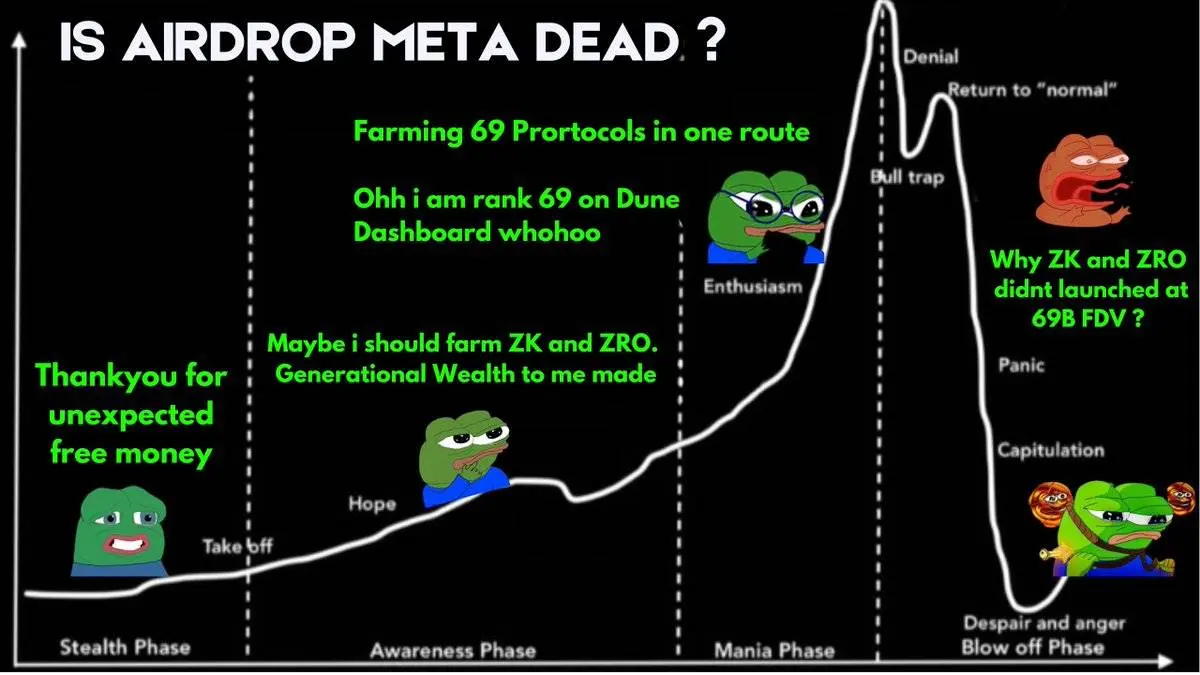
The points meta airdrop limits to account for
The "points meta" is a specific phase in crypto project launches where platforms distribute engagement points instead of liquid tokens. Think of these points as a scoreboard rather than currency. They track your on-chain activity—swaps, liquidity provision, and referrals—but cannot be traded on exchanges today. The value is entirely prospective, hinging on whether the project eventually converts these points into a governance token or utility credit.
This model creates a distinct constraint for participants: you are investing time and capital into a metric that has no immediate market price. Unlike traditional airdrops that drop tokens directly into your wallet, points require you to wait for an official snapshot and a subsequent conversion mechanism. This delay introduces uncertainty. Projects can change their distribution formulas, inflate the total points pool, or cancel the token launch entirely.
To manage this risk, treat points as speculative exposure rather than guaranteed income. The biggest airdrops in history, like Arbitrum or Uniswap, distributed tokens directly. In contrast, points meta projects like MetaMask or LayerZero use this system to build long-term engagement before decentralization. Your strategy should focus on identifying projects with credible tokenomics and clear conversion paths, rather than chasing every new points program. Understanding this difference is critical to avoiding wasted effort on projects that may never issue a token.
Points meta airdrop choices that change the plan
Earning points for a potential MetaMask (META) airdrop is not free labor. You are trading time, capital efficiency, and on-chain privacy for speculative upside. Before committing resources, evaluate the concrete costs against the likelihood of a token launch and the final payout size.
The following table breaks down the primary tradeoffs across different engagement methods. Use this to decide where your effort yields the highest return.
Capital Efficiency vs. Volume
High-frequency swapping generates more points but incurs substantial gas fees. On Ethereum mainnet, a single swap can cost $5–$20 in gas, depending on network congestion. If the airdrop allocation is diluted across millions of users, these costs may exceed the value of the tokens received. Consider using Layer 2 solutions or alternative chains if supported by the rewards program to mitigate this overhead.
Privacy and On-Chain Footprint
Every transaction you make to earn points is permanently recorded on the blockchain. This creates a detailed profile of your holdings, trading habits, and counterparty interactions. Projects often use this data to filter out bots or sybil attackers. If you value financial privacy, the tradeoff between points and anonymity is significant. Use a dedicated wallet for airdrop hunting to isolate your main assets from potential risks.
Opportunity Cost
Time spent managing wallets, checking eligibility, and executing transactions is time not spent on other yield-generating activities or professional work. While some users treat airdrop hunting as a part-time job, the hourly return is often lower than traditional freelance work. Evaluate whether your time could be better deployed elsewhere, or if the potential upside justifies the daily grind.
The market for META tokens remains speculative. Until an official launch date and tokenomics are published by ConsenSys, any price data is based on unlisted derivatives or community estimates. Use the chart above to monitor broader market sentiment, but remember that airdrop values are determined by allocation formulas, not just market price at launch.
Build a practical airdrop strategy
The Points Meta Airdrop 2026 is not a passive reward; it is a test of consistent on-chain behavior. Projects like MetaMask use point systems to filter out bots and identify genuine users before distributing tokens. To succeed, you must treat your wallet activity like a structured routine rather than a series of random transactions. This approach minimizes gas waste and maximizes the quality of your interaction data.
1. Verify wallet compatibility and security
Before engaging with any airdrop infrastructure, ensure your wallet is configured for the specific network requirements. MetaMask points are often tied to swaps and interactions within the MetaMask portfolio app or specific dApp integrations. Start by enabling the "Portfolio" tab or relevant feature flags in your settings. Crucially, use a dedicated "airdrop wallet" with a small amount of ETH for gas fees. Never connect your primary savings wallet to unknown testnets or dApps, as this exposes your core assets to potential smart contract risks.
2. Execute consistent, low-value swaps
Point systems typically reward volume and frequency over transaction size. You do not need to trade large sums to accumulate points; small, regular swaps are often more effective. Use the MetaMask swap interface to trade stablecoins or minor amounts of ETH weekly. This creates a clean history of user activity. Avoid complex DeFi strategies like leverage or flash loans unless explicitly required, as these can flag your wallet as a bot or MEV searcher, potentially disqualifying you from the reward pool.
3. Engage with supported dApps and referrals
Points are frequently multiplied by interacting with partner protocols or using referral codes. Check the official Points Meta leaderboard or partner page to see which dApps offer bonus multipliers. Engaging with these specific platforms signals to the protocol that you are an active participant in their ecosystem. Additionally, if a referral program is active, share your code with trusted peers. This doubles your earning potential without requiring additional on-chain capital, provided you adhere to the platform's terms of service regarding self-referrals.
4. Monitor snapshots and eligibility criteria
Airdrop eligibility is determined by specific snapshot dates, not just total points accumulated at the end. Projects often take snapshots at irregular intervals or before major network upgrades. Set calendar reminders for these dates and ensure your wallet holds the required balance or has performed the last required action before the snapshot. Missing a snapshot by a few hours can reset your progress for that cycle. Regularly check official announcements for updates on eligibility windows.
5. Prepare for token claim and tax implications
Once points convert to tokens, the claim process may require interacting with a specific claim portal or paying a gas fee. Ensure your wallet has enough native currency for this transaction. Also, airdrops are often treated as taxable income in many jurisdictions at the fair market value on the day of receipt. Keep detailed records of your point accumulation, snapshot dates, and claim transactions. This documentation simplifies tax reporting and protects you during any future audit of your crypto activity.
Watch Out for Weak Meta Airdrop Options
The Meta Points program has generated significant interest, but not every feature is designed for long-term value. As you proceed with the 2026 infrastructure, it is essential to distinguish between high-yield activities and those that consume gas fees without meaningful returns. Many users fall into the trap of over-interacting with low-utility dApps, mistaking volume for value.
The "Earn" Tab Illusion
The in-wallet Earn tab often highlights staking opportunities with attractive APYs. While these can be profitable, they frequently require locking assets in protocols with unclear tokenomics. Before depositing, check the protocol’s audit status and vesting schedules. If the rewards are paid in a volatile governance token with no immediate utility, the risk often outweighs the potential gain.
Gas Fee Traps
Some airdrop farming strategies involve micro-transactions across multiple chains to boost "activity" scores. This approach is a common mistake. The gas costs, especially on Layer 2 networks during peak times, can quickly exceed the value of the points earned. Calculate the break-even point: if your average transaction cost is $0.50 and you earn $0.10 in points, you are losing money. Focus on high-impact interactions rather than sheer volume.
Phantom Liquidity Pools
Be wary of liquidity pools that promise massive airdrop multipliers. These pools often suffer from impermanent loss or are designed to extract value from early depositors. Verify the pool’s total value locked (TVL) and the project’s revenue model. If a pool has high yields but low TVL, it is likely a temporary incentive scheme that will vanish once the airdrop claim window closes. Stick to pools with sustainable economic models and transparent treasury management.
Points meta airdrop: what to check next
Before committing time or capital to the points meta airdrop, it helps to understand the mechanics of token distribution and the risks involved. These answers address the most common practical objections readers face when evaluating AI crypto rewards.
No comments yet. Be the first to share your thoughts!