How MetaMask Points Mechanics Work
The term "Points Meta" describes a specific farming strategy rather than an official product from MetaMask. It refers to the practice of accumulating reward points within the MetaMask wallet by performing everyday DeFi actions. This distinction is critical: you are not farming a separate "Points Meta" token, but rather stacking points that may unlock future rewards or airdrops.
The official mechanism is straightforward. Users earn points by swapping tokens, bridging assets, or interacting with dApps through the MetaMask wallet interface. These points contribute to your overall level, which determines the eligibility and value of potential rewards. The process is designed to incentivize regular usage of the MetaMask ecosystem rather than speculative holding.
To participate, you must use the MetaMask mobile app. Navigate to the Rewards tab and tap Levels to view your progress. This dashboard tracks your unlocked rewards and allows you to claim them directly. There is no separate token to buy or stake; the value is derived entirely from the activity you perform within the wallet.
Understanding this mechanic helps separate fact from hype. Many projects market "points" as guaranteed airdrops, but MetaMask’s program is a loyalty system. The points themselves do not have a direct market price, but the rewards they unlock can be valuable. Treat this as a low-risk way to engage with DeFi while potentially qualifying for future incentives.
The value of these points is tied to the broader crypto market. As seen in the current price of Ethereum, market volatility can impact the perceived value of any future rewards. However, the cost of farming is low since it only requires using the wallet you likely already own. Focus on consistent, genuine usage rather than artificial activity to maximize your standing.
Core Activities to Stack Points
Earning points for the potential MetaMask airdrop isn't about luck; it's about consistent, verifiable on-chain behavior. The rewards system tracks specific interactions across your wallet, turning routine crypto habits into tangible credit. Think of it as building a financial resume that the protocol can audit.
Start with the most direct action: swapping tokens. Every trade executed through MetaMask's built-in swap feature generates points. This is the highest-volume activity, so even small, regular swaps add up. To understand the market context for these trades, keep an eye on the asset you're moving.
Swapping isn't the only lever. Staking your assets within the MetaMask interface also contributes to your total. By locking up ETH or other supported tokens, you demonstrate long-term commitment, which the rewards algorithm favors. This activity requires less frequent attention than swapping but provides steady, passive point accumulation.
Finally, do not overlook the referral program. Inviting new users to MetaMask is a high-yield activity because it directly grows the network. If you refer friends or family who then engage in swaps or staking, you earn additional points based on their activity. This creates a compounding effect that amplifies your own efforts.
To maximize your returns, treat these three pillars—swapping, staking, and referring—as a unified strategy. Consistency matters more than volume. A steady stream of small, verified transactions will outperform sporadic, large trades. Visit the official MetaMask Rewards page to track your progress and claim unlocked benefits.
Infrastructure and Tooling for Efficiency
Points farming is less about luck and more about volume. To stack enough points for a meaningful MetaMask airdrop share, you need to execute transactions frequently. This volume creates a direct dependency on low-cost blockchain infrastructure. If your gas fees eat into your capital or erode the value of the points you earn, the strategy fails before it begins.
The most efficient path for this volume is Layer 2 (L2) networks. Ethereum L2s like Arbitrum, Optimism, Base, and zkSync offer transaction costs that are a fraction of the mainnet. A swap that costs $5 on Ethereum might cost a few cents on an L2. This price difference allows you to execute the same number of transactions with significantly less capital at risk. You are essentially buying efficiency with lower overhead.
Managing Gas Costs and Market Timing
Gas fees fluctuate with network congestion. High gas periods can turn a profitable points strategy into a loss. Monitoring the Ethereum mainnet price helps you understand the baseline cost of a transaction. When ETH is high, L2 fees often rise in sympathy, though they remain cheaper in absolute terms.
This chart shows the recent price action of ETH. Use it to gauge market sentiment. If the market is volatile, you might see spikes in L2 activity as traders rush to move funds. Timing your swaps during lower activity windows—often early UTC mornings or weekends—can reduce your per-transaction cost. Lower costs mean you can swap more often, accumulating points faster for the same total spend.
Choosing the Right Wallet and Bridge Tools
Not all wallets are built for high-frequency points farming. MetaMask is the standard because it natively supports the MetaMask Points program. However, you need to ensure you are using the official wallet to track your progress correctly. Other wallets may support L2s but won't contribute to the MetaMask point stack.
The widget above tracks the current ETH price. Keep an eye on this alongside your gas spending. If ETH drops significantly, the dollar cost of your swaps decreases, effectively boosting your points per dollar spent. This is a simple arbitrage of market conditions against your points accumulation rate.
Bridging and Network Selection
To participate on L2s, you need to bridge your assets from Ethereum mainnet. Use official bridges like the Arbitrum Bridge or Base Bridge to minimize the risk of smart contract exploits. Third-party bridge aggregators can be convenient but add another layer of smart contract risk. For a high-stakes airdrop strategy, sticking to official infrastructure is the safest route.
Once bridged, you can swap tokens on the L2 DEXs. Focus on pairs with high liquidity to avoid slippage. Slippage is another hidden cost that reduces your effective capital. By keeping costs low on both gas and slippage, you maximize the efficiency of your points stacking.
Hardware Wallets for Security
If you are moving significant capital to farm points, a hardware wallet like a Ledger or Trezor adds a critical security layer. These devices sign transactions offline, protecting your private keys from malware on your computer.



As an Amazon Associate, we may earn from qualifying purchases.
The products above are popular choices for securing crypto assets. They do not generate points themselves, but they protect the capital you use to generate them. A compromised wallet means lost funds and zero points. Security is the foundation of any long-term points strategy.
Security Risks and Scam Avoidance
The Points Meta Airdrop is a high-value target for bad actors. Because the official program relies on on-chain activity and wallet verification, scammers have built an entire ecosystem of fake claim sites designed to steal your credentials. You must treat every unsolicited link as a potential threat until verified.
Phishing attempts usually mimic the official MetaMask interface or third-party analytics dashboards. These sites often promise instant points or early access to the META token. When you connect your wallet or enter your seed phrase, the attacker drains your assets. Remember that legitimate airdrop claims never require you to input a private key or seed phrase into a web form.
To stay safe, only interact with the official MetaMask Rewards tab within the verified application. Avoid clicking links from social media comments or DMs claiming to offer "guaranteed" points. If a site looks slightly off in URL structure or design, close it immediately. Your security depends on verifying the source before you sign any transaction.
Final Checklist for Points Meta Airdrop
Before you claim any rewards, ensure your infrastructure is secure and your activity aligns with Meta’s visibility metrics. Treat your wallet like a bank vault: if the keys are exposed, the points don’t matter.
Verify your MetaMask profile is complete and linked to your primary identity. Avoid using burner wallets for main points farming; use a dedicated, clean wallet to track your history clearly.
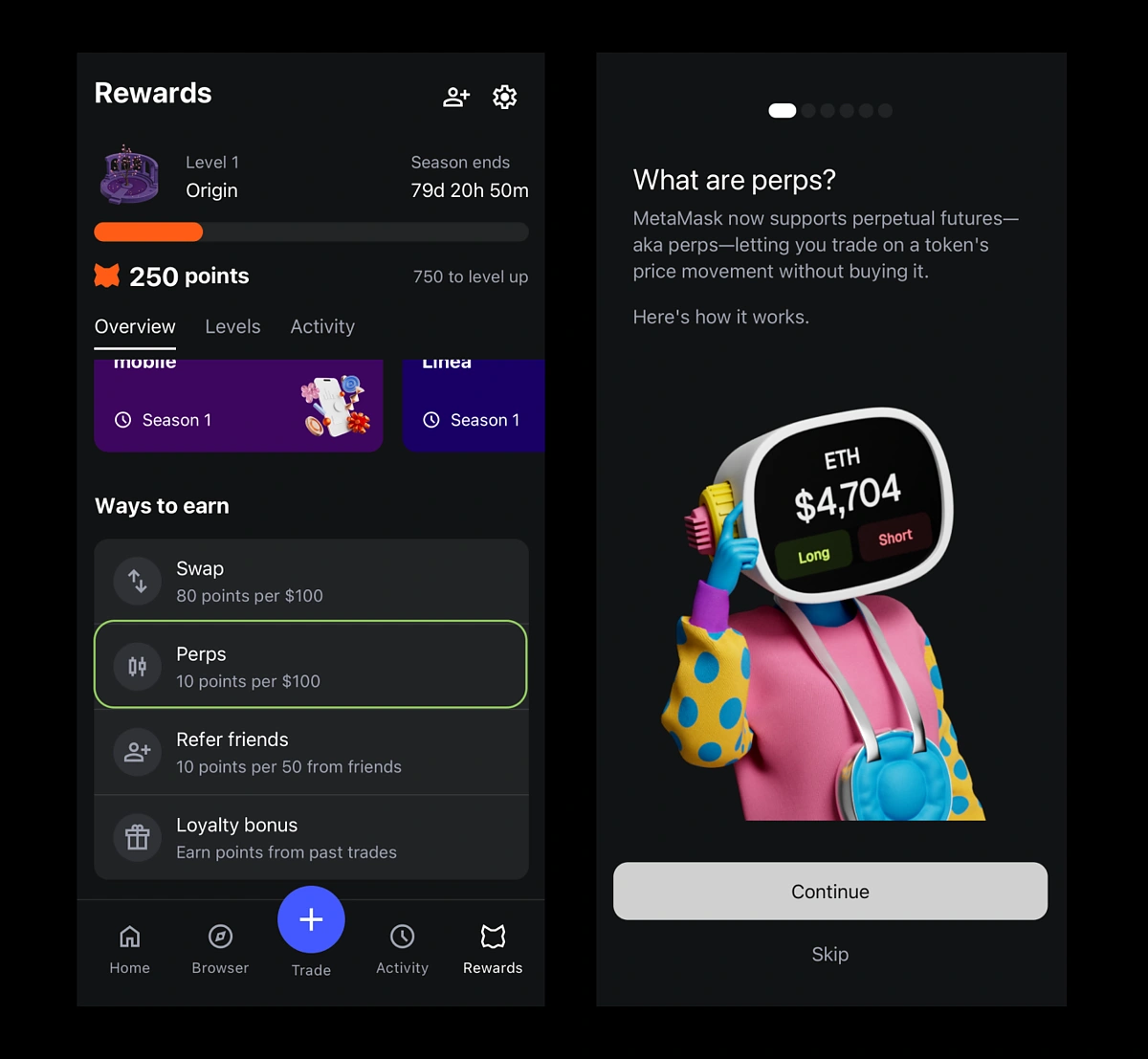
Open the MetaMask mobile app and navigate to the Rewards tab. Check your Levels to confirm your current standing and ensure no rewards are sitting unclaimed in the queue.

Monitor your points accumulation against market activity. Use a live chart to see how broader market movements correlate with your eligibility windows, ensuring you stay active during high-visibility periods.

When eligible, click Claim airdrop directly within the app. Inspect the network, conditions, and registration dates before signing any transaction to avoid phishing traps or misaligned network fees.
Keep your eyes on the prize, but keep your security protocols tighter. A missed claim is a lost opportunity; a compromised wallet is a total loss.
Common Questions About Points Meta
Navigating the Points Meta ecosystem requires distinguishing between passive point accumulation and active token claiming. While the MetaMask Rewards tab tracks your progress toward tiered benefits, the actual airdrop claim process involves separate on-chain verification steps. Understanding this split workflow is essential to avoid missing eligibility windows.
How to claim MetaMask airdrop?
To claim an airdrop, you must connect your wallet directly through the official MetaMask interface. Navigate to the airdrop section, select the specific campaign, and click the "Claim airdrop" button. The interface will display network conditions and registration dates before you sign the transaction. Always verify the contract address to ensure you are interacting with the official program, not a phishing site.
How to use MetaMask points?
Points function as a loyalty metric rather than a tradeable asset. You can view your accumulated points and unlocked reward levels by tapping the "Rewards" tab in the MetaMask mobile app. From there, select "Levels" to see your current standing and claim available non-token rewards. These points stack over time, incentivizing consistent usage of the browser extension and mobile wallet for everyday transactions.
What are airdrop rewards?
Airdrop rewards typically consist of new tokens distributed to early users to bootstrap network activity. For beginners, these act as a welcome bonus; for experienced users, they represent a strategic entry point into emerging protocols. The value of these rewards fluctuates with market conditions, so monitoring the price of the underlying asset is crucial before deciding whether to hold or sell.
How to qualify for airdrops?
Qualification usually requires proving sufficient on-chain activity and wallet ownership. This often means holding specific tokens or interacting with dApps during designated snapshot periods. Simply holding a wallet inactive will not qualify you. Check the specific campaign rules on official channels like MetaMask's support pages to ensure your past transactions meet the minimum activity thresholds.
No comments yet. Be the first to share your thoughts!