The points meta airdrop strategy limits to account for
Your MetaMask points are not a passive reward; they are a currency that tracks your actual on-chain behavior. The system prioritizes volume and consistency over complex gaming. You earn points primarily through swaps, perpetual futures trading, and spending via the MetaMask card or bridge. Understanding this constraint means focusing on actions that generate genuine trade volume rather than searching for obscure loopholes.
The core mechanic is simple: trade more, earn more. However, the distribution is tiered. Higher reward levels unlock better perks, such as fee discounts and exclusive token allocations. This structure encourages sustained activity rather than one-off large transactions. You should view your wallet activity as a steady stream of verified interactions. Random, sporadic trades will likely yield negligible points compared to consistent daily usage.
Avoid the trap of over-optimizing for small gains. The points system is designed to reward users who are already active in DeFi. If you are already swapping tokens or trading perps, you are likely earning points automatically. The strategy, therefore, is not to change your behavior radically, but to ensure your existing DeFi activities are routed through MetaMask’s integrated services. This approach minimizes risk while maximizing the accumulation of points through natural usage.
Points meta airdrop strategy choices that change the plan
Maximizing your MetaMask airdrop rewards requires balancing activity volume against transaction costs. The points system rewards specific behaviors, but not all activity yields equal returns. You need to evaluate which actions generate the highest point density relative to gas fees and opportunity costs.
Low-Cost Daily Engagement
Routine interactions like swapping stablecoins or using the in-app bridge generate consistent points with minimal friction. These activities are ideal for maintaining a clean on-chain history without draining your capital. The tradeoff is lower point velocity compared to high-volume trading, making this strategy better for long-term accumulation rather than quick spikes.
High-Volume DeFi Activity
Larger swap volumes and perpetual futures trading accelerate point accumulation significantly. However, these actions incur higher gas fees and potential slippage. If the cost of gas exceeds the projected value of the additional points, the net yield turns negative. This approach suits traders who are already active in DeFi and can absorb transaction costs while waiting for the airdrop event.
Referral and Social Actions
Referring new users and completing social tasks provide a boost to your point total. These actions are essentially free points, but they depend on your network size and influence. The downside is that social metrics can be volatile; a sudden drop in referral activity may stall your progress. Use this as a supplement to core trading activity, not as a primary strategy.
Risk and Gas Efficiency
The most critical factor is gas efficiency. Every transaction burns capital. You must compare the point value gained against the ETH or network fees paid. Low-value transactions often result in a net loss after accounting for gas. Focus on larger, consolidated swaps rather than numerous small ones to minimize overhead and maximize the point-per-dollar ratio.
| Strategy | Point Velocity | Gas Cost | Risk Level |
|---|---|---|---|
| Daily Swaps | Low | Low | Low |
| High-Volume Trading | High | High | Medium |
| Referrals | Medium | None | Low |
| Perps Trading | Very High | Very High | High |
Choose the next step in the points meta airdrop strategy
Building a strategy for the MetaMask airdrop requires treating your wallet like a portfolio of active accounts rather than a static storage vault. The goal is to maximize points through verified activity without triggering anti-sybil filters that could disqualify your rewards. You need to decide which actions yield the highest return on gas and time.

List every wallet address you currently use for swaps, NFTs, or DeFi interactions. MetaMask tracks points across all connected accounts, so you must identify which ones have historical activity. Consolidating or cleaning up inactive wallets now prevents confusion during the final claim phase.
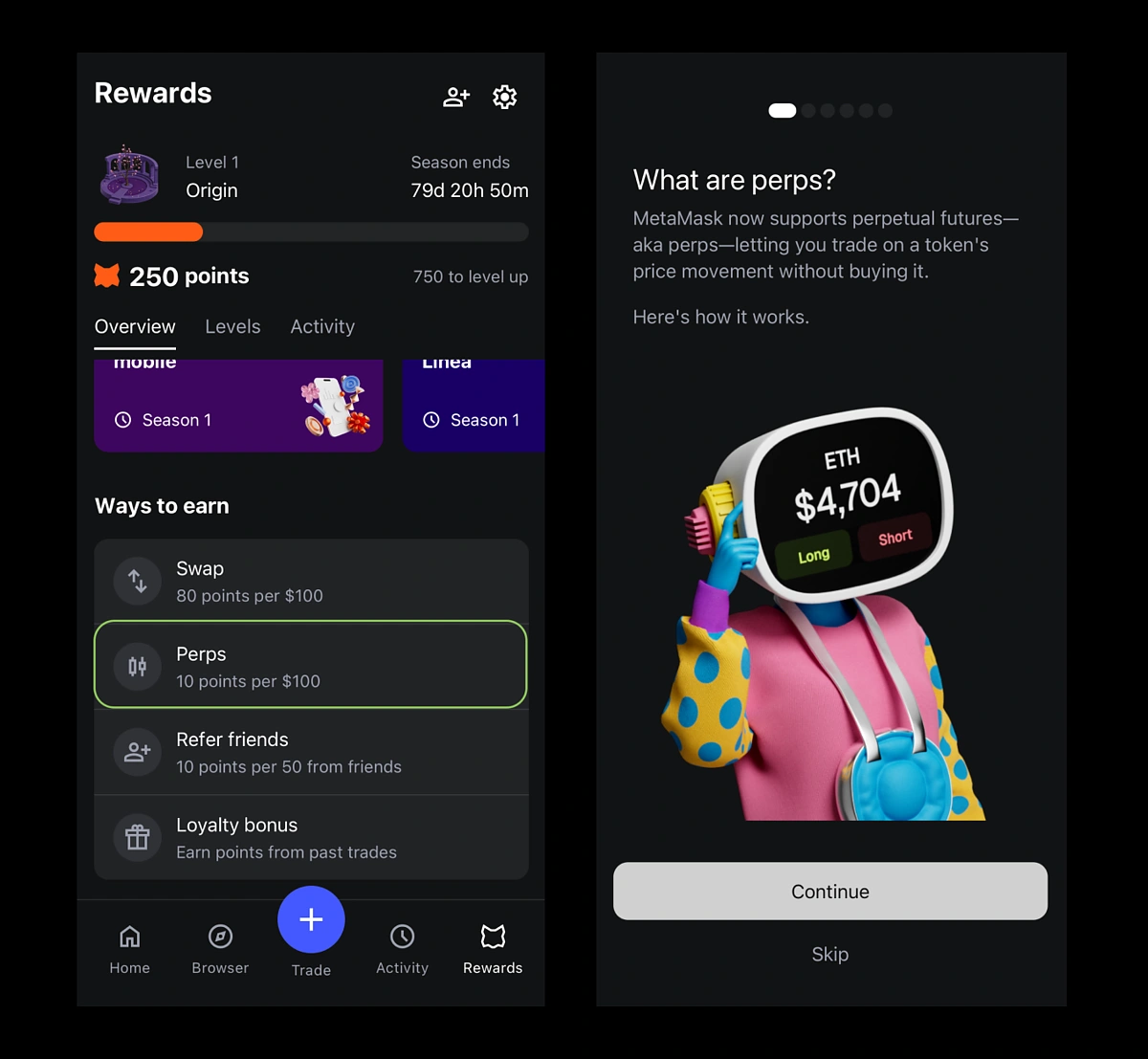
Focus your trading volume on on-chain swaps within the MetaMask browser extension or mobile app. Points are primarily awarded for trade volume, so executing regular swaps for tokens you intend to hold is the most reliable way to accumulate points. Avoid wash trading, as it offers no real benefit and risks flagging your account.

Explore secondary point multipliers like MetaMask Perps and referral programs if you have the risk tolerance. Perps trading can generate significant points quickly, but it introduces market risk. Referrals provide passive points for inviting others, which is a low-risk way to boost your total if you have a network of active users.
Monitor official MetaMask channels for the exact airdrop claim window. When the claim opens, you will need to connect your wallets and select which accounts to include in the distribution. Setting up calendar reminders ensures you do not miss the registration dates or conditions required to receive your tokens.
Avoid Weak Airdrop Strategies
Many users treat MetaMask Points like a passive income stream, but the infrastructure rewards activity, not just holding. The system prioritizes consistent volume and specific on-chain actions over sporadic engagement. If you are farming points without a clear plan, you risk spending more in gas fees than the potential airdrop value justifies.
Common Mistakes to Avoid
Ignoring Gas Costs Earning points requires transactions. If you swap small amounts on high-fee networks, the gas costs will eat your rewards. Focus on chains with low transaction fees or larger trade volumes that justify the cost. A $5 swap on Ethereum mainnet rarely makes sense for point farming.
Relying on Single Actions Points are tiered. Simply connecting your wallet does little. You need to stack activities: swaps, perpetual futures trading, and spending via the MetaMask browser extension. Relying on one method caps your growth. The algorithm favors diversified activity across these categories.
Claiming Early or Incorrectly Airdrop claims often require specific wallet connections and eligibility windows. Missing the registration date or using a burner wallet not linked to your primary identity can disqualify you. Always verify the official MetaMask Rewards page for current conditions before executing large volumes.
Proof Checks
Before committing significant capital, verify the current point multiplier rates. Use the official MetaMask dashboard to track your progress. Do not trust third-party "guaranteed" claim tools. These are often scams designed to drain your wallet. Stick to the native interface for all claims and point tracking.
Points meta airdrop strategy: what to check next
Before committing capital or time to the MetaMask airdrop, it helps to separate marketing hype from actual mechanics. The points system is designed to reward active usage, not passive holding. Below are direct answers to the most common questions about claiming, strategy, and point utility.
No comments yet. Be the first to share your thoughts!